


Architecture exhibition. 16.05. - 30.06.2009. Berlin, Germany
LONDON HOUSE
 |
 |
 |
 |
 |
 |
 |
 |
 |
Photography: Alex Franklin
A NEW BRINKWORTH DESIGNED LONDON HOUSE
Brinkworth design took a commission to re-design a detached five-bedroom house in a West Hampstead conservation area. Despite its ample size the interior arrangement crippled the living experience: long corridors took spatial preference over room size and two large staircases dominated the organisation of the habitable spaces, resulting in isolated rooms, a lack of natural light, resulting in inefficient lighting and heating solutions typical of a 1930s period house.
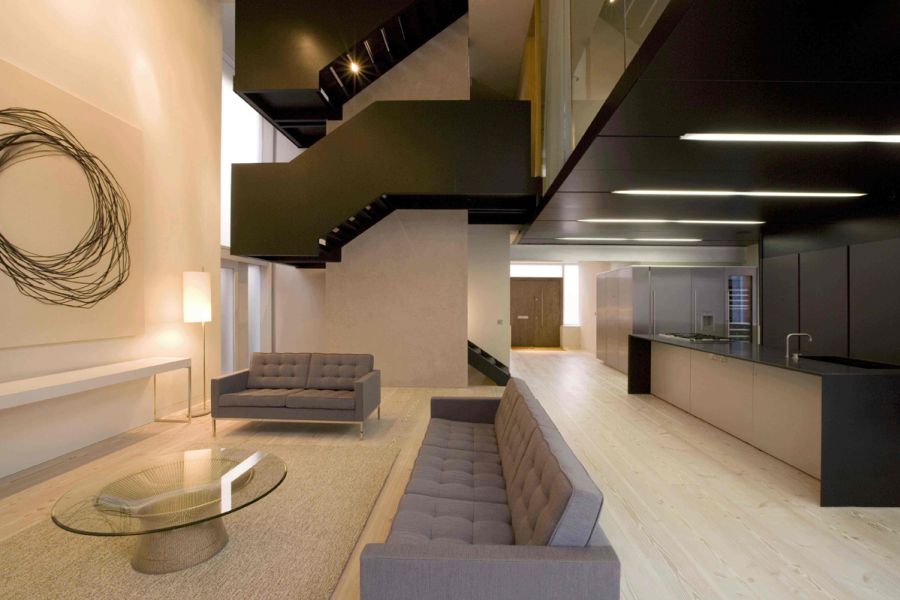
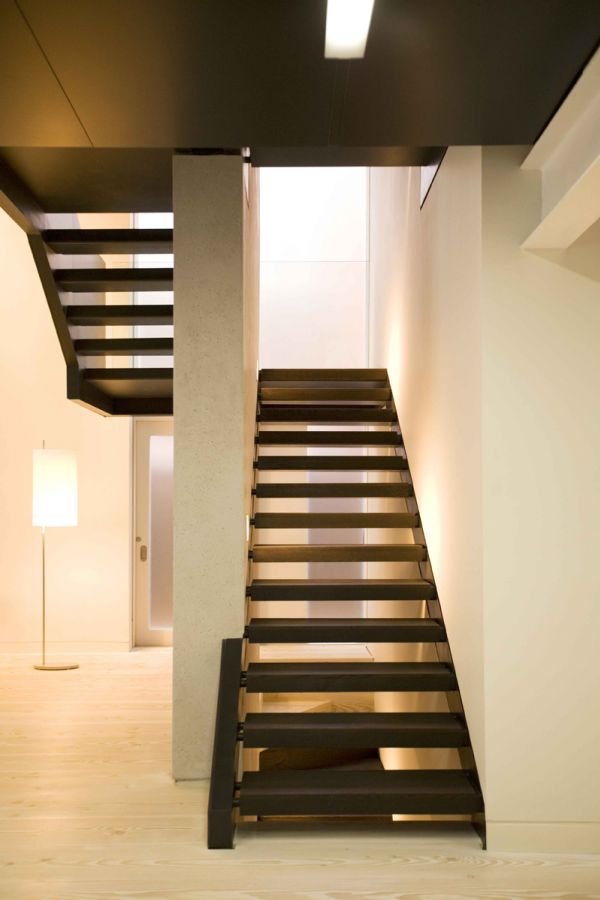
The clients envisioned the project changing the space of the house in order to utilise it properly - both visually and architecturally as well as keeping design features as minimal as possible. Brinkworths strategy was to excavate what wasn’t needed, rationalise each floor level and service these with a single staircase of steel and concrete, eliminating wasteful corridors.
Kevin Brennan from Brinkworth explained, “we were aware that our intentions would be fairly invasive, but we were sensitive to our intervention as guests and the existing envelope being a very accommodating host to our occupation, taking advantage of possibilities without loosing the rhythm of the house”.
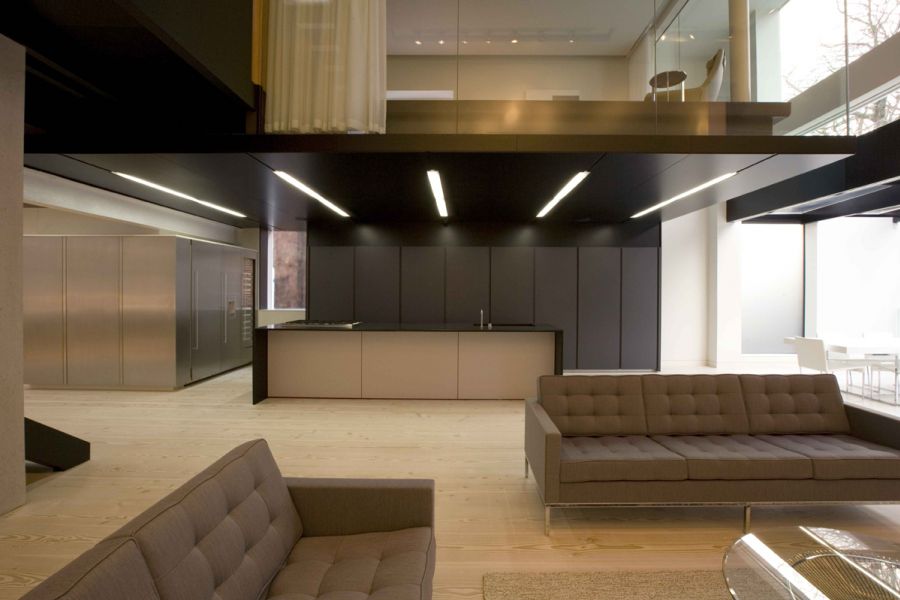
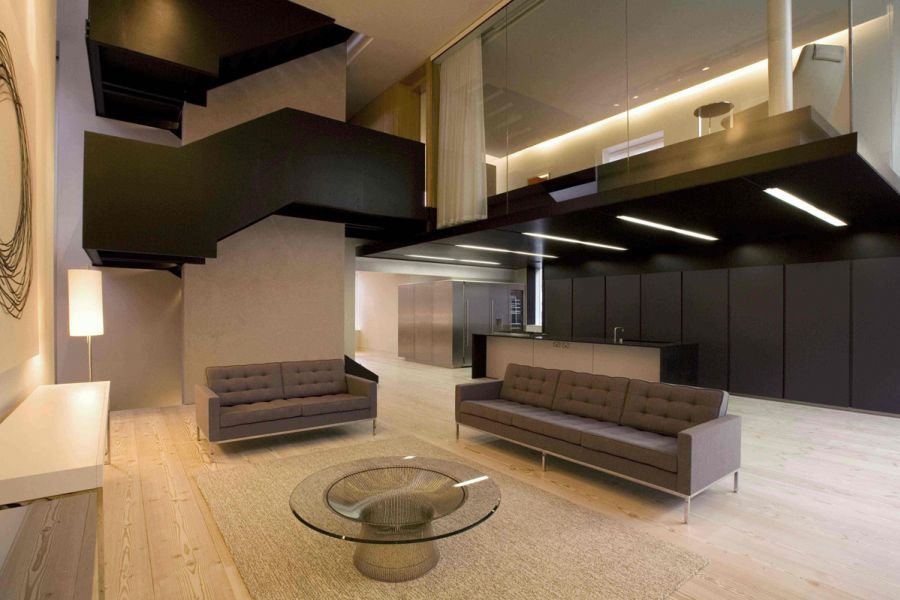
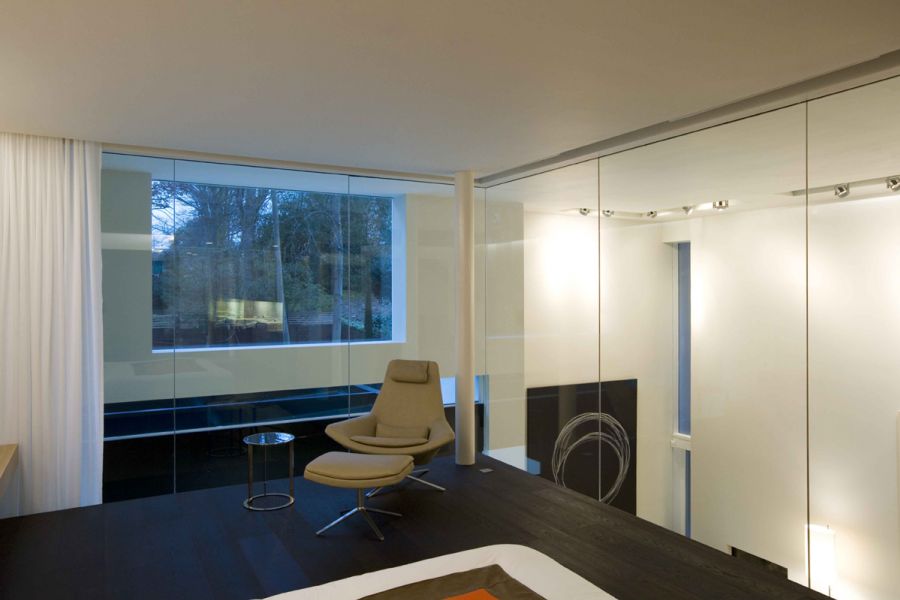
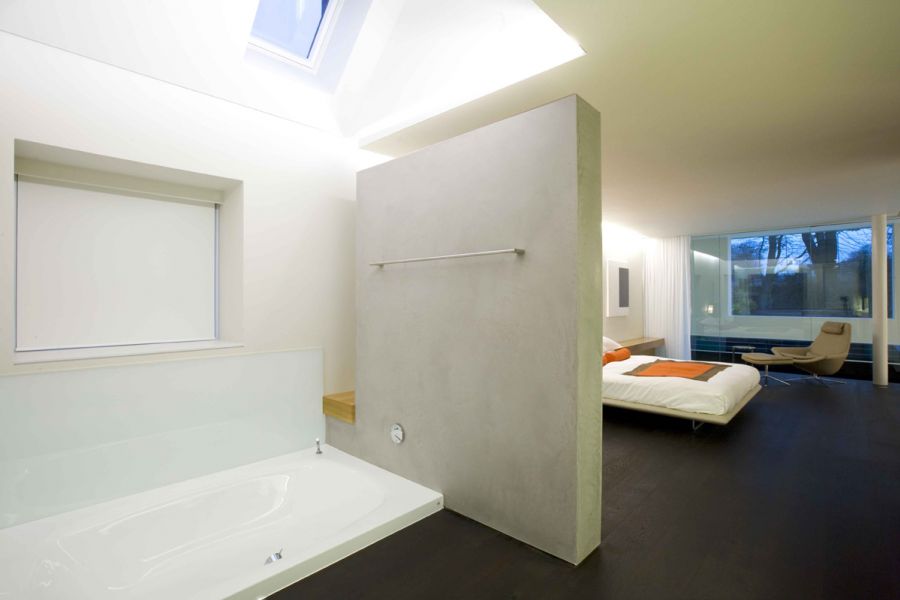
The clients required only a basic level of accommodation, which gave enough slack to create an impressive void. To find this volume the first floor plate was removed, leaving a double height box 10m x 10m x 10m. A new steel armature was inserted, stabilising the box and allowing us to hang what appears to be a first floor mezzanine: 4 x 10 meters in size, and designed as a glass en suite bedroom. It looks over the first floor, setting up the geometry of the extension into the garden. The mezzanine appears to slot into the building without intruding on the original design of the house, solving spatial problems as well as increasing light (the gaps left between the mezzanine and extension are used as windows) on the ground floor and providing void to the basement, used as a utilities and games room.
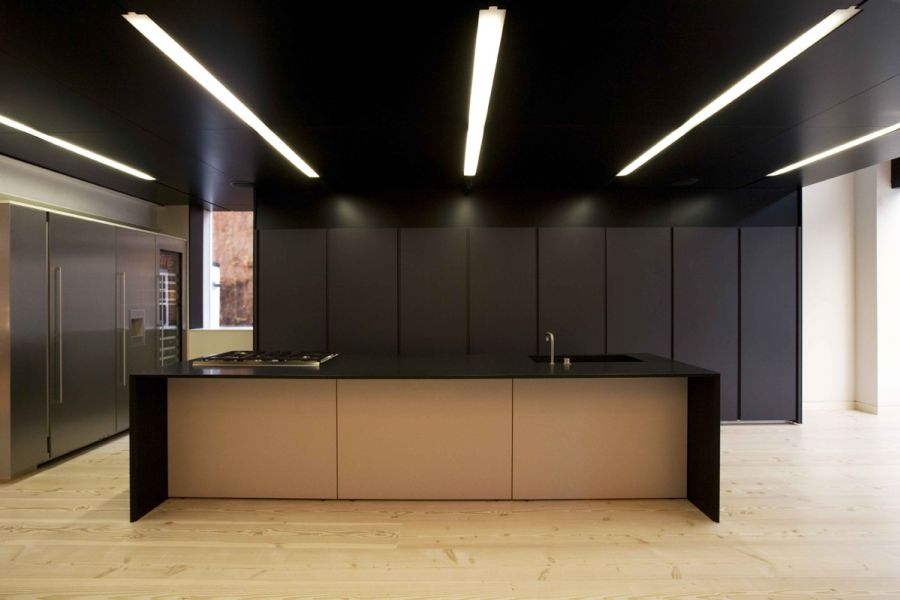
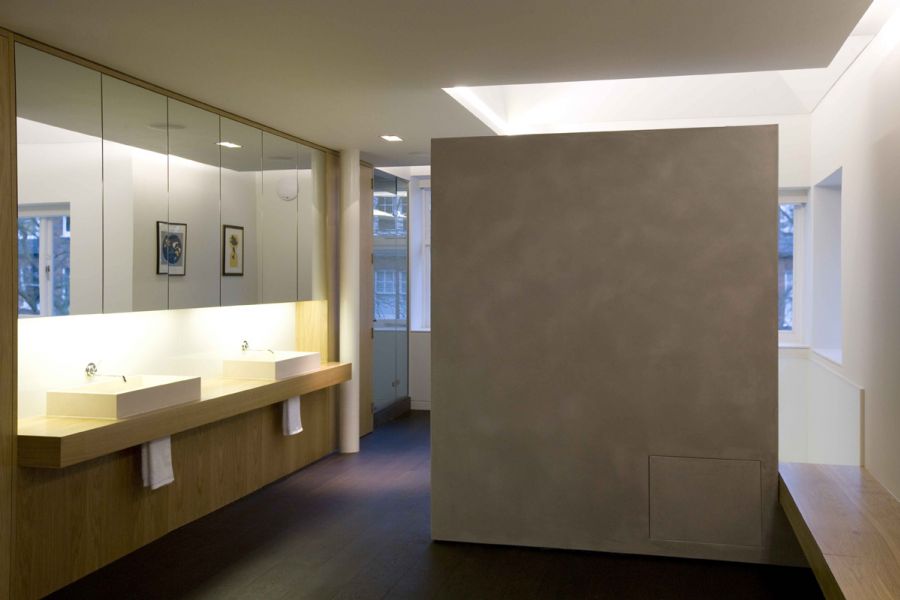
The overall design focuses on a ‘box within a box’ concept (inspired by conceptual artist Dan Graham’s work with transparency and reflection) incorporating the isolation of different living space areas: the mezzanine, the new back extension and cubes that resourcefully double up as furniture and smaller corridors, all inform one another without physical contact - maintaining an optimum fluidity of space. The minimalist impression is developed through concealed lighting throughout the house, the ceiling to the mezzanine visible to the ground floor is covered in black lacquered panels with slits of light running through to the extension, giving the unusual impression of illumination escaping from a single, solid block of light. The only light fittings visible are the track systems for the art; large ivory white walls on the ground floor are left blank for the clients’ extensive collection.
The kitchen, also part of the living room area continues this concealed concept; all the utilities are hidden away in blocks until the space needs to be used- enabling the client to alternate between the two separate environments.
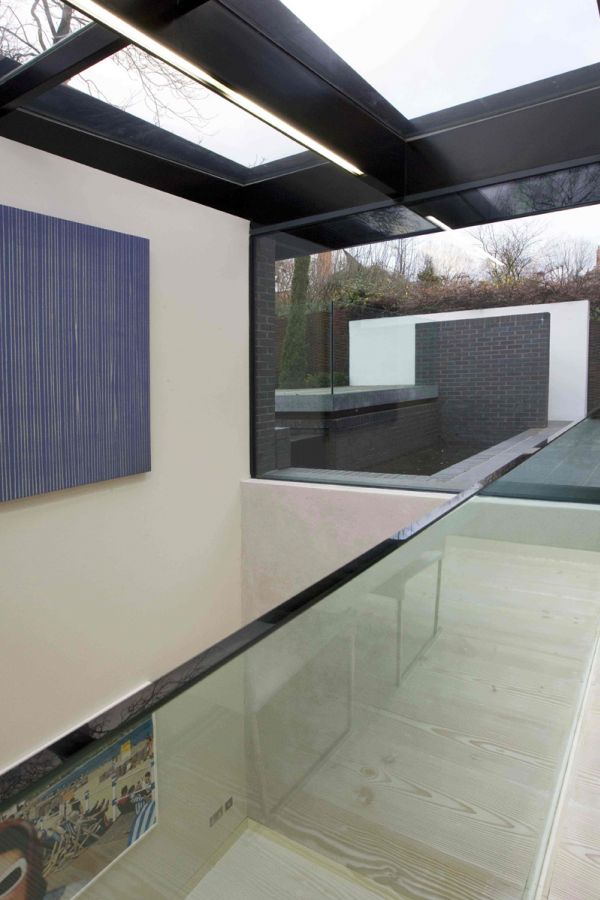
Additional slits created in the building for the optimum reception of natural light. The previous window shelter caused by a step garden afforded the house little light. The garden was levelled and re-landscaped to immerse it further into the design scheme of the house.
The intimacy of the house has been retained through the use of exposed natural materials; Douglas Fur lime-washed broad planks throughout the ground floor, whilst black oak is used on the mezzanine, in harmony with the extension ceiling parallel to it, emphasising the overall warmth in design.
www.brinkworth.co.uk
A NEW BRINKWORTH DESIGNED LONDON HOUSE
Brinkworth design took a commission to re-design a detached five-bedroom house in a West Hampstead conservation area. Despite its ample size the interior arrangement crippled the living experience: long corridors took spatial preference over room size and two large staircases dominated the organisation of the habitable spaces, resulting in isolated rooms, a lack of natural light, resulting in inefficient lighting and heating solutions typical of a 1930s period house.
The clients envisioned the project changing the space of the house in order to utilise it properly - both visually and architecturally as well as keeping design features as minimal as possible. Brinkworths strategy was to excavate what wasn’t needed, rationalise each floor level and service these with a single staircase of steel and concrete, eliminating wasteful corridors.
Kevin Brennan from Brinkworth explained, “we were aware that our intentions would be fairly invasive, but we were sensitive to our intervention as guests and the existing envelope being a very accommodating host to our occupation, taking advantage of possibilities without loosing the rhythm of the house”.
The clients required only a basic level of accommodation, which gave enough slack to create an impressive void. To find this volume the first floor plate was removed, leaving a double height box 10m x 10m x 10m. A new steel armature was inserted, stabilising the box and allowing us to hang what appears to be a first floor mezzanine: 4 x 10 meters in size, and designed as a glass en suite bedroom. It looks over the first floor, setting up the geometry of the extension into the garden. The mezzanine appears to slot into the building without intruding on the original design of the house, solving spatial problems as well as increasing light (the gaps left between the mezzanine and extension are used as windows) on the ground floor and providing void to the basement, used as a utilities and games room.
The overall design focuses on a ‘box within a box’ concept (inspired by conceptual artist Dan Graham’s work with transparency and reflection) incorporating the isolation of different living space areas: the mezzanine, the new back extension and cubes that resourcefully double up as furniture and smaller corridors, all inform one another without physical contact - maintaining an optimum fluidity of space. The minimalist impression is developed through concealed lighting throughout the house, the ceiling to the mezzanine visible to the ground floor is covered in black lacquered panels with slits of light running through to the extension, giving the unusual impression of illumination escaping from a single, solid block of light. The only light fittings visible are the track systems for the art; large ivory white walls on the ground floor are left blank for the clients’ extensive collection.
The kitchen, also part of the living room area continues this concealed concept; all the utilities are hidden away in blocks until the space needs to be used- enabling the client to alternate between the two separate environments.
Additional slits created in the building for the optimum reception of natural light. The previous window shelter caused by a step garden afforded the house little light. The garden was levelled and re-landscaped to immerse it further into the design scheme of the house.
The intimacy of the house has been retained through the use of exposed natural materials; Douglas Fur lime-washed broad planks throughout the ground floor, whilst black oak is used on the mezzanine, in harmony with the extension ceiling parallel to it, emphasising the overall warmth in design.
www.brinkworth.co.uk
Copyright 2007 - 2009 architeria.eu all rights reserved

